
Decisions You Need to Make About Your Transplant Choice
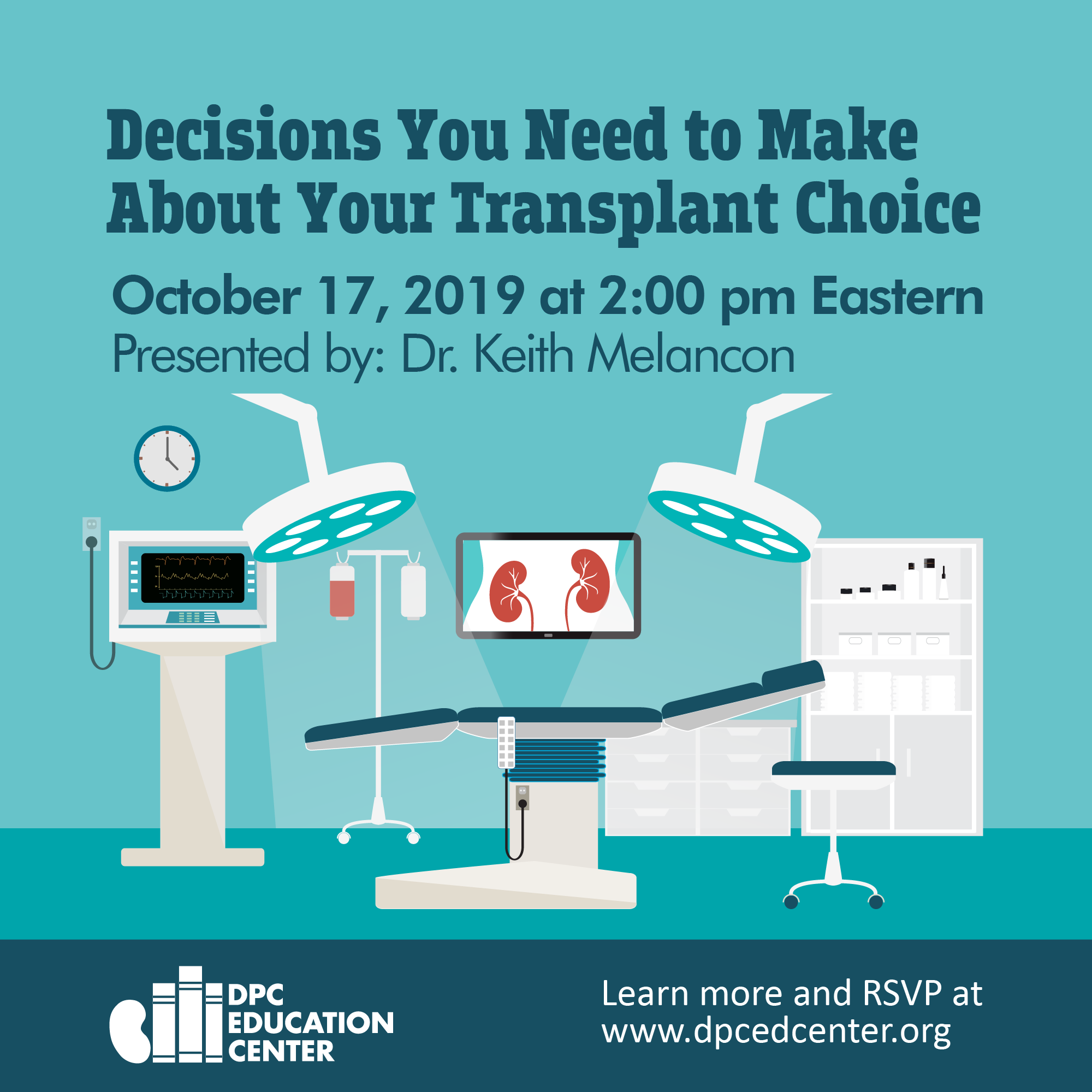
Dr. Keith Melancon will touch on the following three key points: 1) Accepting high risk donors, 2) Understanding transplant wait time and 3) What makes a great transplant recipient.
Hannah Bracamonte2024-03-28T21:00:54-04:00September 27th, 2019|Categories: eNews, Kidney Transplant, Webinar|
Dr. Keith Melancon will touch on the following three key points: 1) Accepting high risk donors, 2) Understanding transplant wait time and 3) What makes a great transplant recipient.
Hannah Bracamonte2024-03-28T21:00:58-04:00August 23rd, 2019|Categories: Diagnosis of Kidney Disease, Early Intervention, eNews, Webinar, What Causes Kidney Disease|Tags: Diabetes|
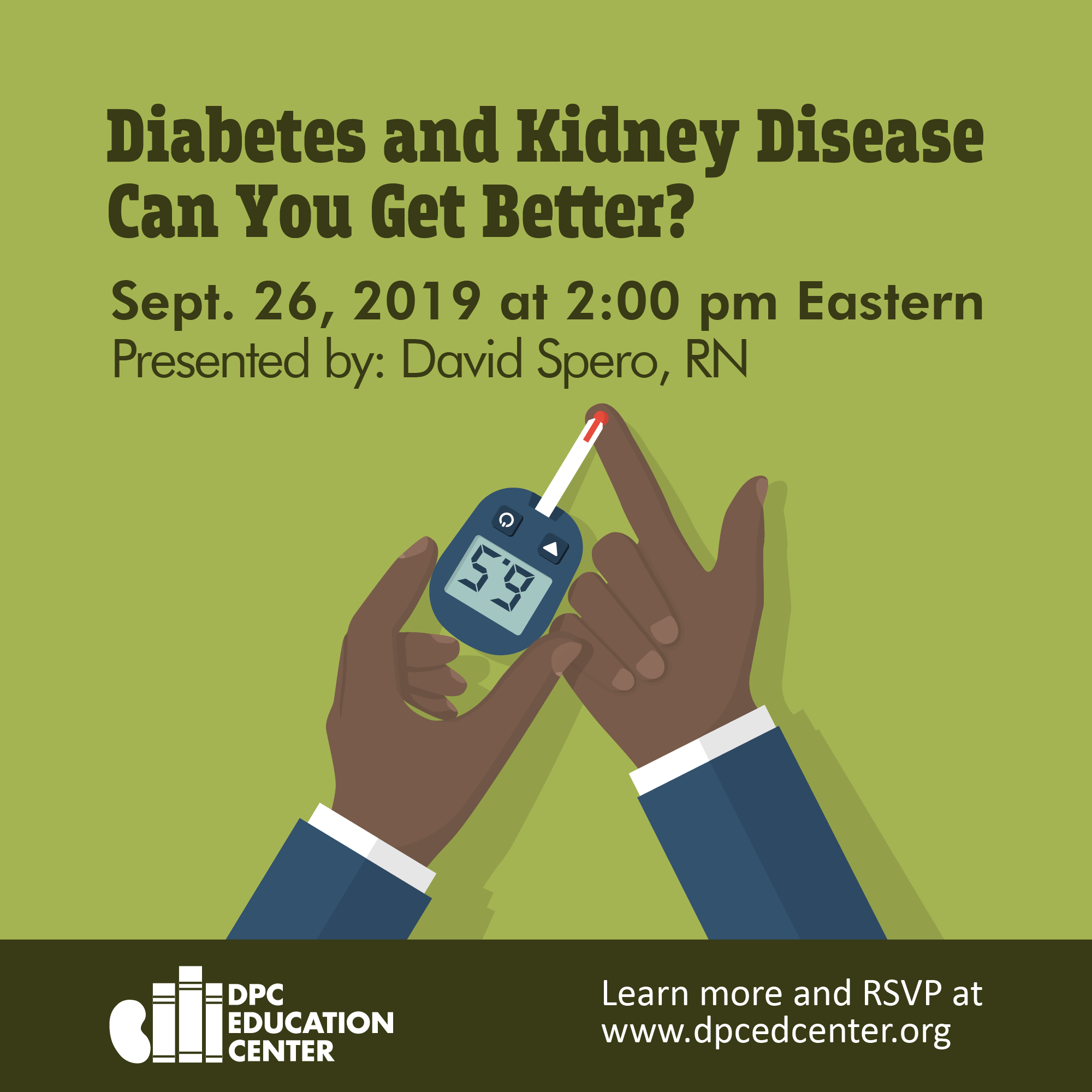
During this webinar you will learn: 1) How Diabetes Affects Your Kidneys, 2) How Controlling Diabetes Improves Health and Well Being and 3) Three Proven Strategies for Controlling or Reversing Diabetes. David Spero has been a nurse for 40 years, has lived with a chronic illness for 30 years, writes regularly for Diabetes Self-Management magazine and web site and for other health publications. He is author of The Art of Getting Well: Maximizing Health When You Have a Chronic Illness (Hunter House 2003), and Diabetes: Sugar Coated Crisis – Who gets it, who profits, and how to stop it (New Society [...]

Hannah Bracamonte2024-03-28T21:00:59-04:00August 13th, 2019|Categories: Diagnosis of Kidney Disease, Early Intervention, eNews, Stages of Kidney Disease|
Less than 60 percent of US Veterans with advanced stages of kidney disease (eGFR <30) receive care from a nephrologist. This is important as kidney disease is 34 percent higher among veterans than the general population. In addition, seeing a nephrologist could delay the progression of the disease and prevent other health issues from emerging. The percentage of veterans that work with a nephrologist varies by age, with patients over 69 being least likely. The data suggests that additional efforts need to be made to ensure veterans with kidney disease are getting the care they need. Read the full article. Understand [...]

Hannah Bracamonte2024-03-28T21:01:00-04:00August 5th, 2019|Categories: eNews, Immunizations, Staying Healthy|
We all need shots (vaccines) to help protect us from serious diseases. This protection is called immunization. To help our community stay safe, DPC Education Center is proudly participating in National Immunization Awareness Month. Shots can prevent serious diseases like the flu, measles, and pneumonia. They can also prevent some infections. This is especially important for people with kidney disease, as they are at a higher risk for getting an infection, which can be fatal. It’s important to know which shots you need and when to get them. Everyone age 6 months and older needs to get a flu vaccine every [...]
Hannah Bracamonte2024-03-28T20:59:05-04:00June 28th, 2019|Categories: Diagnosis of Kidney Disease, eNews, Kidney Transplant, Webinar|
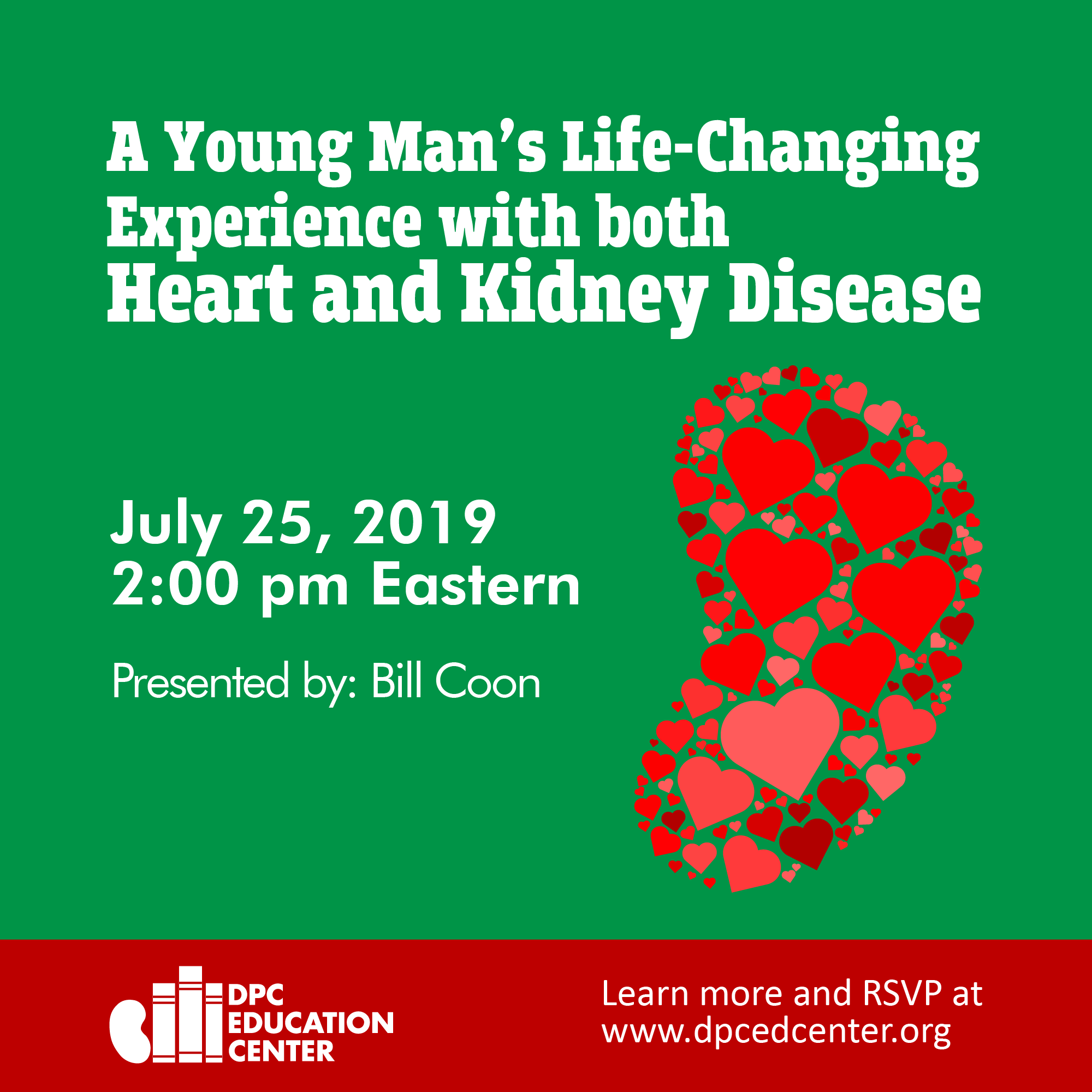
Bill Coon became a two-time heart and kidney transplant recipient in his 20s. During the webinar, he will share experiences from his 70-day hospital stay and recovery from a heart and kidney transplant to help others learn how to improve their patient experience. He will also provide insight from his personal experience on what one might expect during post-transplant recovery.

Hannah Bracamonte2024-03-28T20:59:05-04:00June 19th, 2019|Categories: Additional Resources, Costs for Treatment, eNews, Fact Sheet|
Thousands of Americans with end-stage renal disease rely on Medicare for their healthcare needs. However, there are some medical services, such as dental, vision and hearing, where Medicare coverage is lacking. If you are on Medicare and need these services, here is a three-page guide that provides free and lower-cost treatment resources. Check out the guide.
Hannah Bracamonte2024-03-28T20:59:06-04:00June 13th, 2019|Categories: Early Intervention, eNews, Lifestyle, Physical Health, Sex and Intimacy, What Causes Kidney Disease|
People with HIV are more likely to develop chronic kidney disease. In addition, some HIV medications can affect the kidneys. Getting tested for HIV, understanding your risk, and living a healthy life are steps you can make to better control your health. National HIV Testing Day is June 27, and the DPC Education Center encourages everyone to get tested for HIV. HIV (human immunodeficiency virus) is the virus that causes AIDS. The only way to know if you have HIV is to get tested. Many people with HIV don’t have any symptoms. In the United States, 1 in 7 people living [...]

Hannah Bracamonte2024-03-28T20:59:12-04:00May 2nd, 2019|Categories: Employment, eNews, Nutrition, Pediatric Kidney Disease, Treatment, Webinar, What Causes Kidney Disease|
Print out the flier At the Dialysis Patient Citizens Education Center we believe it is extremely important to educate kidney patients at all stages of kidney disease as well as their family members. We offer free, monthly webinars and conference calls on an assortment of topics related to kidney care. We work hard to help fill in the gaps for people living with kidney disease who need to learn more about their disease, treatments and quality of life to enable them to be key members of their health care team. Included is a list of educational topics for the [...]
Hannah Bracamonte2024-03-28T20:59:14-04:00April 15th, 2019|Categories: Blog, Humor and Laughter, Kidney Transplant, Lifestyle|Tags: Patient Perspective|
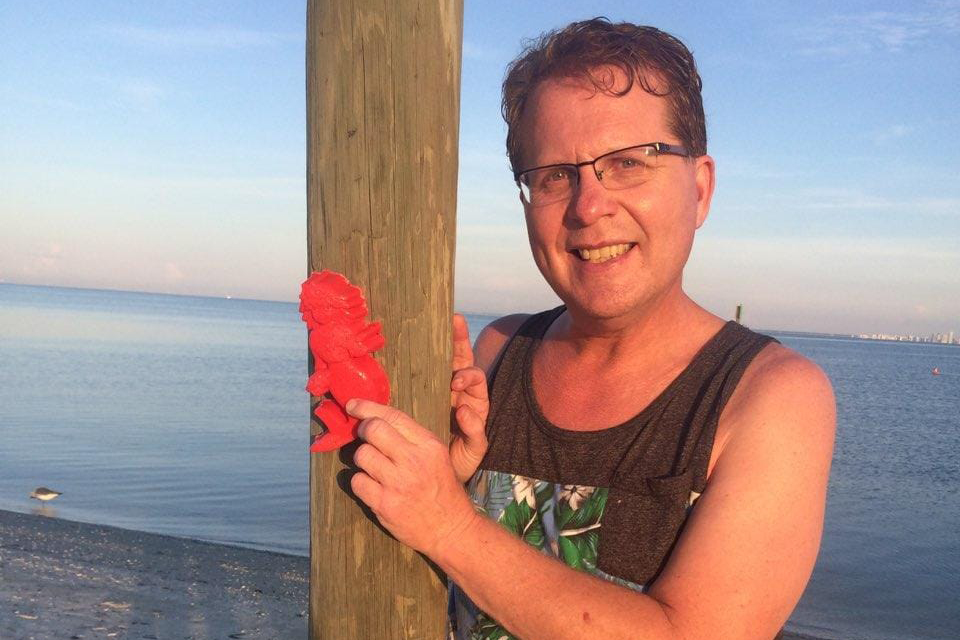
April is National Donate Life Month, and it is also National Humor Month. Martinlow Spaulding, living with kidney disease for over 25 years, easily celebrates the significance of both. Spaulding is a transplant recipient who combines humor and laughter in his daily life. He tells a lot of jokes—some of them get a few giggles, and some of them get a few groans. But his positive attitude and outlook on life help him find the “funny” in a lot of situations. Spaulding, the youngest of five children, is the recipient of not one but two gifts of life—both donated by his [...]

Hannah Bracamonte2024-03-28T20:59:17-04:00March 29th, 2019|Categories: Diagnosis of Kidney Disease, In-Center Hemodialysis, Lifestyle, Physical Health, The Kidney Citizen|Tags: Patient Perspective|
By Mark Scirocco, Patient Ambassador I have been on in-center hemodialysis for three years. It was a rough start, as I went through 11 chest catheters in a little over a year. Two of them just fell out while I was sitting at home; the others got clogged. The last one almost killed me, stopping fluid in my upper body and head. My fistula was barely ready when they took that one out and placed a stent in my chest to allow fluid past my upper body. Three months after starting my fistula, I needed a fistulogram to open it up. [...]
1001 Connecticut Avenue, NW, Suite 1230 Washington, DC 20036
Phone: 1-855-291-3725
Fax: 1-888-423-5002
Email: info@dpcedcenter.org