


Nancy Scott, DPC Education Center Project Manager
Many patients crash into dialysis and are placed into in-center dialysis centers. Hopefully, more providers are educating patients about treatment options. When patients are engaged and educated about their respective conditions, they tend to have a better quality of life both physically and mentally. The world of kidney disease is forever changing and making a significant impact on the journey of renal patients.
Explore Potential Treatment Options for Kidney Failure[1]
A kidney transplant is often the best possible treatment option for patients with kidney failure. If you aren’t eligible for a kidney transplant, or if you are awaiting a kidney from a living or deceased donor, you will need dialysis.
When it comes to treating kidney failure with dialysis, you have certain options. From dialyzing at home to getting treated at a center, discover which one could better suit your lifestyle.
Home treatment options
Peritoneal Dialysis (PD)
Peritoneal Dialysis (PD) is a needle-free treatment done at home that uses the lining of the abdomen (or belly) to filter waste from the blood. It is the treatment most similar to your natural kidney function. Some of the potential benefits of PD include:
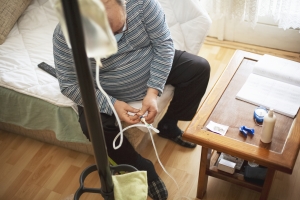
- Control of your own treatment and a more flexible schedule
- Greater ability to pursue personal interests
- Preservation of remaining kidney function, leading to enhanced clinical outcomes
- Better transplant outcomes because PD is also gentler on the body, including the heart.
Home hemodialysis (HHD)
HHD works just like in-center hemodialysis by using an external filter to clean toxins from your body, only the machine is smaller and more user-friendly. There are many potential benefits to HHD, such as:
- The ability to dialyze in the comfort of your own home
- Greater ability to travel
- Shorter recovery time after treatments
- Fewer medications required
Dialysis center options
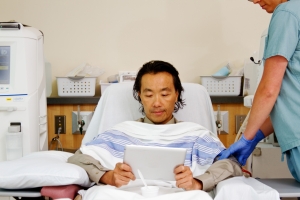
In-center hemodialysis
In-center hemodialysis requires you to visit a dialysis center three times per week. It uses a machine to filter your blood and clear toxins from your kidneys. In-center hemodialysis offers several potential benefits, which include:
- The chance to socialize with other patients and staff
- A personalized care team
- No supplies to store at home
In-center nocturnal dialysis
In-center nocturnal dialysis allows you to dialyze in-center overnight three times per week, for 6–8 hours while you sleep. It also includes potential benefits such as:
- No interference with daytime schedule
- An improved appetite
- Better blood pressure control
The Next Frontier of Transplant Medicine[2]
More than 31,000 lifesaving organ transplants have been performed since Mayo Clinic’s first organ transplant in 1963. Through advances in organ preservation, stem cell therapies, regenerative medicine, bioengineering and artificial intelligence (AI), Mayo Clinic physicians and scientists have been able to improve patient outcomes throughout the transplant journey.
From restoring organs that would otherwise not be safe for transplantation to advancing a bioengineering research strategy to grow humanlike organs, these innovations are changing the practice of transplant medicine.
Safely Transplanting More Organs
Mayo Clinic experts consider organ perfusion systems — mechanical devices that enable donated lungs, hearts, kidneys and livers to remain viable for longer — one of the biggest technological advances in transplantation. As an early adopter of this technology, Mayo Clinic surgeons are restoring organs that would otherwise not be safe for transplantation, meaning more patients have access to lifesaving organ transplants.
“Organ perfusion technology has helped us expand the donor pool and deliver transplants to more patients, all while maintaining some of the best patient outcomes,” says Bashar A. Aqel, M.D.[3], director of the Arizona Transplant Center.
Palliative Care
If you choose not to have a kidney transplant or dialysis, you can choose palliative or supportive care to help you manage your symptoms and feel better. You also can combine palliative care with kidney transplant or dialysis.
Without either dialysis or a transplant, kidney failure progresses, eventually leading to death. Death can occur quickly or take months or years. Supportive care might include management of symptoms, measures to keep you comfortable and end-of-life planning.