
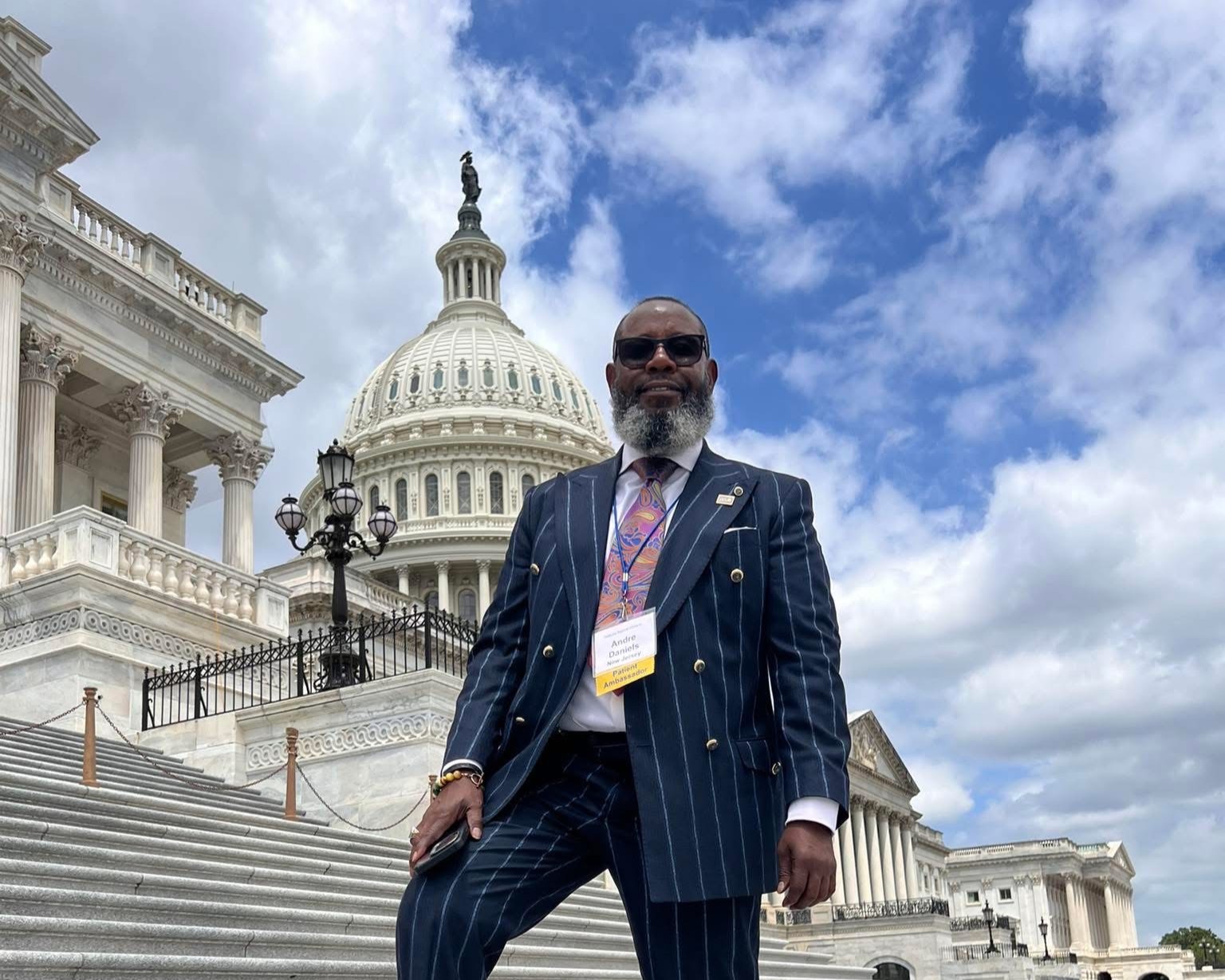
C. Andre’ Daniels, DPC Patient Ambassador
Hope is not passive.
It is not a soft sentiment or wishful thinking.
For patients living with End-Stage Renal Disease, hope is often an act of discipline. It is the decision to keep going through the fatigue, the uncertainty, the appointments, the waiting, and the fear. It is the choice to believe that even in the face of illness–innovation, faith, and human generosity can come together to rewrite a life.
I know this because I have lived it.
When I woke up after my kidney transplant, I knew immediately that my life had changed. What I did not yet fully understand was how profoundly that gift would reshape my days, my priorities, and my purpose. I had been given more than just a successful surgery. I had been given a second chance, and with it came a new responsibility: to protect that gift, to honor it, and to use my experience to encourage others who are still fighting their way forward.
In the weeks after transplant, my life became defined by vigilance and gratitude in equal measure. Weekly labs, medication schedules, follow-up appointments, and careful monitoring became part of my daily rhythm. My immune system, now deliberately suppressed to protect the transplanted kidney, required constant awareness. Masks, disinfecting surfaces, avoiding crowded places, and paying attention to every cough, fever, or change in how I felt became routine.
Simple things took on new significance. Sunlight meant sunscreen and hats. Entering a room meant considering distance, airflow, and exposure. I had to listen to my body in ways I never had before—tracking blood pressure, glucose, weight, cholesterol, and viral markers, while learning to live with side effects like tremors and fatigue.
It was humbling.
It was exhausting.
And yet, it was miraculous.
Because behind every blood draw, every pill organizer, and, every clinic visit, was one astonishing truth: I was alive because someone chose to give.
Where Innovation Meets Humanity
When we talk about innovation in kidney care, many people think first about machines, medications, and medical breakthroughs. And rightly so. Innovation matters. Advances in transplant medicine, immunosuppressive therapies, clinical monitoring, and coordinated care make survival and long-term graft success possible. The transplant itself is a miracle of science, skill, and precision.
But innovation is not only found in technology. It is also found in systems of care, in patient education, in better advocacy, in increased awareness around living donation, and in the courage of people willing to say yes to helping another human being live.
My transplant journey taught me that innovation and hope are deeply connected. One gives us tools. The other gives us the reason to keep using them.
The doctors, nurses, coordinators, social workers, and specialists who guide transplant patients are doing far more than treating organs. They are helping restore futures. They are walking patients through what often feels like a second birth—one filled with equal parts wonder, caution, and adjustment. Their expertise steadies us. Their vigilance protects us. Their reassurance carries us through some of our most vulnerable moments.
And still, for all the science involved, the heart of this journey remains profoundly human.
Honoring a Living Donor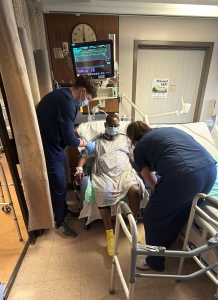
I named my donor Nova Journey—a symbol of new beginnings, courage, and extraordinary generosity.
Living donation is not theoretical to me. It is not a talking point, a brochure, or a distant concept. It is the reason I get to see another sunrise. It is the reason my family can exhale with relief. It is the reason tomorrow is no longer something I merely hoped for, but something I am blessed to inhabit.
In moments of uncertainty—waiting for lab results, confronting infections while immunocompromised, or enduring unexpected stays in the ICU—I reminded myself that this kidney was more than an organ. It was trust. It was sacrifice. It was love expressed through action.
Every day I carry that gift with reverence.
That is why living donors deserve not only our thanks, but our public honor. They are part of one of the most powerful forms of innovation in healthcare: the willingness of one person to step forward so another person can keep living.
Learning to Live Again
One of the truths people do not always discuss enough is that transplant recovery is not linear.
There were setbacks. There were infections. There were frightening moments when lab numbers shifted, my heart raced, and I found myself back in emergency rooms and intensive care units. There were days when fear entered quietly and nights when gratitude kept me awake.
But alongside those moments, something else grew stronger: resolve.
I learned that transplant life is not about returning to the person you were before illness. It is about becoming someone new. Someone more attentive. More grateful. More aware of how fragile and extraordinary life truly is.
Between appointments, I practiced patience.
Between lab reports, I practiced hope.
Between moments of fear, I practiced gratitude.
That practice matters.
Remaining hopeful does not mean denying reality. It means facing reality honestly while refusing to surrender your spirit to it. It means understanding that the road may be hard and still believing it is worth walking. It means allowing gratitude to coexist with vigilance, and faith to coexist with uncertainty.
For kidney patients and transplant recipients alike, hope often lives in the ordinary routines of survival. It lives in taking the medicine. Showing up to the clinic. Getting on the machine. Following through. Asking questions. Staying informed. Trusting God. Trusting the process. Trusting that your story is still being written.
From Survivor to Advocate
As a civic leader and longtime community servant, I have always believed that our lives carry obligations beyond ourselves. My transplant deepened that conviction.
I realized quickly that my story was not meant to remain private. It was meant to be shared.
Shared with families wondering whether living donation is safe.
Shared with patients still waiting and wondering if their call will ever come.
Shared with communities that have never seriously considered organ donation.
Shared with people who need to know that second chances are real.
Advocacy became part of my healing.
Whether speaking publicly, participating in kidney walks, supporting awareness efforts, or encouraging people to have meaningful conversations about organ donation, I now see every opportunity as a chance to honor the person who helped save my life—and the broader transplant community that made that miracle possible.
If my voice can shorten someone else’s wait, then I must use it.
If my experience can calm another family’s fear, then I must share it.
If my gratitude can inspire one more person to consider donation, then this gift keeps multiplying.
That is how hope becomes action.
A Message for Patients Still Fighting
For those still on dialysis, I want to say this plainly: I know the fight is real.
I know what it means to live by numbers, schedules, treatments, and uncertainty. I know the emotional toll, the physical fatigue, and the quiet battles that many patients fight without ever fully putting them into words. I know what it means to hold on when the days are long and the future feels distant.
But I also know this: your life still holds possibility.
Innovation in kidney care continues to evolve. Advocacy continues to matter. More people are learning about living donation. More patients are sharing their truths. More families are becoming part of the conversation. There is reason to remain hopeful—not because the journey is easy, but because progress is real and purpose can still be found even in the struggle.
Never underestimate the power of your testimony. Your survival is not small. Your endurance is not invisible. Your fight has meaning.
Gratitude That Endures
Transplant life is lifelong. The medications will remain. The labs will continue. The precautions will stay part of my daily rhythm.
But so will the awe.
So will the reverence.
So will the commitment to live intentionally.
I wake up each day knowing that someone I may never fully repay gave me the chance to keep writing my story. The best way I know to honor that gift is to protect it, to share it, and to serve others with renewed purpose.
I am here because generosity exists in this world.
That truth should move all of us—patients, caregivers, clinicians, policymakers, donors, and advocates alike. Because when we talk about innovation in kidney care, we must never lose sight of the fact that the greatest breakthroughs are not only scientific. They are also human. They are found in compassion, courage, and the willingness to act on behalf of someone else’s future.
A Message to Future Donors and Supporters
To those considering living donation,
to families wrestling with fear and hope,
to supporters who make transplant programs possible,
and to advocates who continue to spread awareness:
Know this—
you are not simply saving organs.
You are restoring futures.
You are keeping families whole.
You are giving time, the most precious gift of all.
Because of you, I am still here.
Because of you, my story continues.
Because of you, life has been given again.