


Dr. Stefano Stuard, MD, PhD, Nephrologist

Dr. Michael Anger, MD, Nephrologist
Overview:
- Hemodiafiltration (HDF) is a type of dialysis that cleans the blood using two cleaning processes: diffusion and convection. Standard hemodialysis mainly relies on diffusion alone.
- Diffusion and convection remove waste in different ways. Diffusion helps remove smaller waste products, while convection helps move larger waste substances out of the blood. Using both processes allows for a broader range of waste removal during treatment.
- High-volume hemodiafiltration refers to HDF treatments that use a larger amount of clean, sterile replacement fluid during the dialysis session, as described in clinical studies. This fluid is carefully prepared and monitored.
- HDF does not change how long a dialysis session lasts. The treatment time is similar to standard hemodialysis. The main difference is how the blood is cleaned, not the length of the session.
- HDF is available in some dialysis centers. Not all patients receive the same type of dialysis. The choice of treatment depends on individual health needs, equipment availability, and clinical judgment, and should be discussed with the dialysis care team.
Kidney Function and the Need for Dialysis
Healthy kidneys do many important jobs. They clean the blood by removing waste products and extra water. They help keep the right balance of salts and minerals in the body. Kidneys also help control blood pressure, keep bones healthy, and help the body make red blood cells.
When the kidneys stop working well, waste products and fluid build up in the blood. This can cause swelling, feeling tired, shortness of breath, and a general feeling of not being well. Dialysis is a treatment that helps do some of the work of the kidneys. It does not replace everything healthy kidneys do, but it helps remove waste and extra fluid from the blood.
Standard Hemodialysis
Most people in the United States with kidney failure receive standard hemodialysis (HD). This treatment can be done in a dialysis clinic and, for some people, at home.
During HD, blood is taken out of the body through a tube and passed through a filter called a dialyzer. Inside the dialyzer, waste products move from the blood into a special cleaning fluid (dialysate). The cleaned blood is then returned to the body.
HD removes many small waste products from the blood. However, kidney failure can also lead to the buildup of larger waste substances. These larger wastes may be harder to remove and can stay in the body longer.
Over time, kidney failure and the need for ongoing dialysis can be linked to inflammation, changes in blood pressure during treatment, effects on the heart, and changes in thinking, such as memory or concentration problems. This may help explain why some people continue to feel unwell even when they attend all scheduled dialysis treatments.
Hemodiafiltration: An Alternative Dialysis Method
Hemodiafiltration (HDF) is a type of dialysis that cleans the blood using two processes instead of one (1). HD mainly uses a process called diffusion. With diffusion, waste moves from the blood into the cleaning fluid because there is more waste in the blood than in the fluid (Figure 1). HDF uses diffusion and another process called convection. Convection uses a controlled movement of fluid to help carry waste products out of the blood. This process helps move some waste substances that do not move easily with diffusion alone, including some larger wastes.
By using both diffusion and convection, HDF is designed to remove different types of waste products from the blood (1). HDF has been used for many years in other parts of the world and is available in some dialysis centers in the United States.
Meaning of High-Volume Hemodiafiltration
The term “high-volume” (HV) refers to the amount of extra cleaning fluid used during a dialysis treatment (2). In high-volume hemodiafiltration (HVHDF), clinical studies describe the use of more than 23 liters of sterile replacement fluid during a single dialysis session (2).
This sterile fluid is added to the blood during treatment and removed at the same time through the dialysis filter as part of the cleaning process.
The extra fluid is removed and does not remain in the body after treatment.
Evidence from Clinical Studies
HDF and HVHDF have been studied in many clinical trials and large studies that look at how treatments are used in everyday care. These studies have been done in Europe, Asia, Australia, and Latin America (2–22).
In some large groups of patients, HVHDF was associated with differences in certain outcomes over time (2, 4–6, 8, 9, 21, 23–27). These included measures related to survival, hospital use, heart-related outcomes, and overall well-being. Studies that looked at routine clinical practice reported similar observations in some patient populations (10–14, 16, 17, 19–22). Hospital stays can be influenced by many factors, such as age, other medical conditions, type of dialysis access, and local care practices. One large international study also reported differences in hospital stays among patients treated with HVHDF in some settings (27). These results describe what was observed in groups of patients and do not guarantee the same results for every individual.
Effects During Dialysis Sessions
For many people, the dialysis session itself can be difficult. Sudden drops in blood pressure during treatment can cause dizziness, nausea, muscle cramps, headaches, or feeling very tired after dialysis.
In some clinical studies, patients treated with HDF were observed to have different blood pressure patterns during dialysis compared with patients receiving HD (3, 7, 28–30). Some studies also reported differences in muscle cramping during treatment (1, 7, 26, 31). HDF uses very clean dialysis fluid and adds sterile fluid during the session. In some studies, differences were seen in measured markers related to inflammation between patient groups (1, 32–34).
The length of the dialysis session is usually the same as with HD. The main difference is how the blood is cleaned, not how long the patient is connected to the machine.
Effects Between Treatments and Daily Life

Some patients notice changes between dialysis treatments, not just during the session. In some studies, patients treated with HVHDF reported differences in appetite, energy, or daily activities (35–36). Other studies reported differences in joint or muscle symptoms, such as stiffness or discomfort, in some patient groups (1, 37).
Some patients who switched from HD to HVHDF reported differences in movement or comfort during everyday activities (38). Other studies reported differences in physical activity or physical function over time in groups of patients (23, 26, 39).
Some people also reported differences in how they felt between treatments or in their ability to take part in social activities, such as spending time with family and friends (23, 39). Experiences vary, and not all patients notice the same changes.
Infections and Immune Health
People with kidney failure often have a weaker immune system. Infection risk can be affected by many factors, including overall health, dialysis access type, and care practices. Infections are a common reason for hospitalization among dialysis patients.
Some large clinical and observational studies reported differences in infection-related outcomes, including hospital use related to infections, in some settings (2, 9, 21, 27, 30, 32, 39, 40).
Some studies also reported differences in measured immune responses after vaccines, such as influenza or COVID-19 vaccines, among patient groups (41).
Cardiovascular Health
Heart disease is a leading cause of death in people receiving dialysis. Over time, waste buildup in the blood, inflammation, and changes in blood pressure during treatment can place stress on the heart.
In some studies, HVHDF was associated with differences in certain body measurements related to heart function (43). Differences in heart-related events and hospital use were also reported between patient groups in some settings (2, 8, 9, 21, 27, 40).
Anemia and Energy Levels
Anemia, which means having a low number of red blood cells, is common in people with kidney failure. Anemia can cause tiredness, shortness of breath, and low energy.
Some studies reported differences in the use of medications to treat anemia between patient groups treated with HDF and HD (1, 30, 44, 45). Treatment needs are decided by the dialysis care team and may change over time.
Some patients may notice differences in energy levels or medication use, while others may not. Experiences vary from person to person.
Safety and Availability
When performed with modern equipment, clean water systems, and trained staff, HDF has been used in dialysis centers around the world. As with any dialysis treatment, possible risks include low blood pressure, muscle cramps, access problems, and infection.
All dialysis treatments in the United States, including HD and HDF, follow strict safety and water quality standards. Not all dialysis centers offer HVHDF. Availability may change as clinics update equipment, water systems, and staff training.
Choosing the Right Treatment
HVHDF is not a cure for kidney failure. Dialysis will continue to be part of daily life.
HVHDF is one dialysis approach that may be considered by some patients. It cleans the blood using a different method than HD. Possible effects depend on a person’s health, dialysis access, and treatment goals.
Patients are encouraged to talk with their doctor and dialysis care team about all treatment options to decide what is best for them.
Educational Statement:
This document is provided for educational purposes only. It is intended to give general information and does not describe all possible risks or benefits of dialysis treatments. The information summarized here is based on published studies and may not apply to every person. This material is not intended to replace medical advice or to promote any specific product or device. Treatment decisions should always be made together with a qualified healthcare professional.
Role and Affiliation
Dr. Stefano Stuard is Senior Vice President, Global Clinical Officer for Hemodiafiltration, Fresenius Medical Care, Global Medical Office.
Dr Michael Anger is Senior Vice President, Medical Officer In-Center Dialysis and Quality & Regulatory, Fresenius Medical Care, Global Medical Office, Medical Affairs.
These roles are listed for transparency only and do not imply endorsement, promotion, recommendation, or comparative evaluation of any dialysis treatment, product, or device.
Figure 1
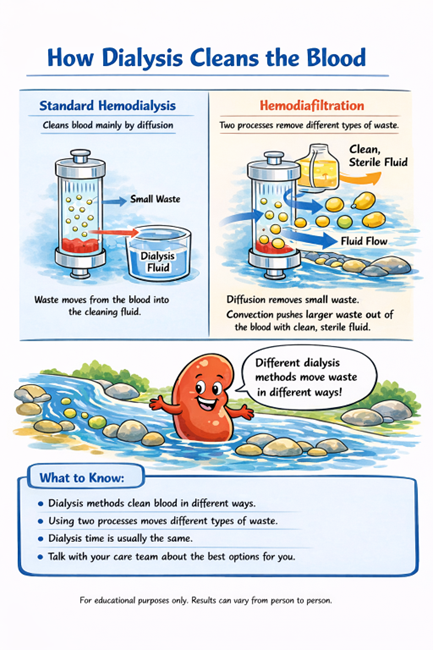
Image Disclaimer: This image was generated using ChatGPT, an artificial intelligence tool developed by OpenAI, for educational purposes. The image does not intentionally reproduce or reference any copyrighted material, products, or proprietary designs. No third-party copyrighted content was used in its creation.
© 2026 Fresenius Medical Care. All Rights Reserved. Fresenius Medical Care and the triangle logo are trademarks for which Fresenius Medical Care AG holds rights. All other trademarks are the property of their respective owners. D/N US-HDF-000010 Rev A 02/2026