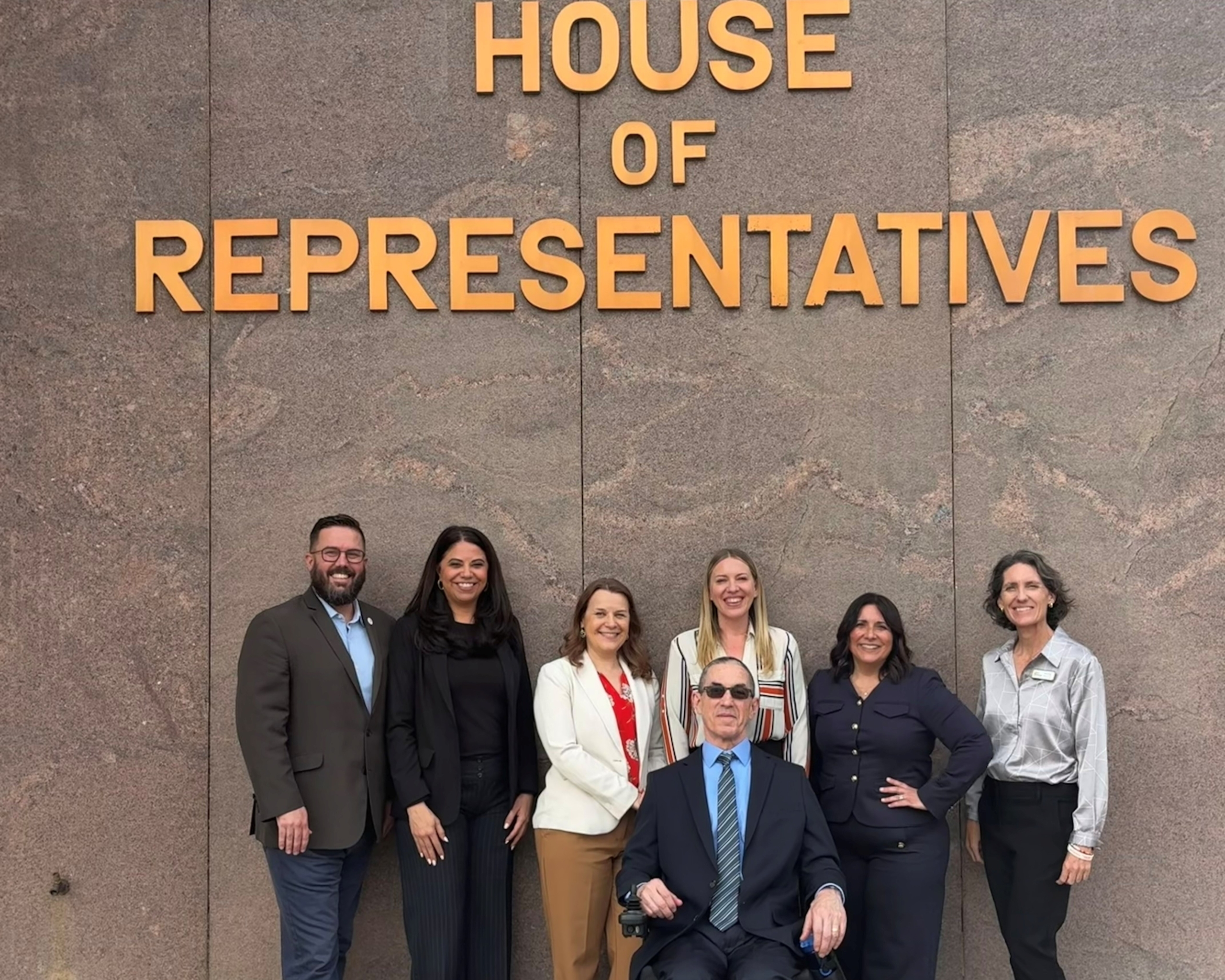

Elizabeth Lively, DPC Eastern Region Advocacy Director

Pamela Zielske, DPC Western Region Advocacy Director
Does advocacy have a “secret sauce” for success? Are there tactics and tools that an organization needs to consider as strategies are developed to get legislation passed? What does success look like? How does optimism and the cumulative impact of advocacy work impact positive outcomes?
Dialysis Patient Citizens (DPC) began a Medigap (Medicare Supplement) campaign in 2022 supporting legislation in the states to provide premium protected Medigap coverage to ESRD patients under-age 65. This campaign supports DPCs goals of improved financial security, increased patient choice and access to kidney transplantation.
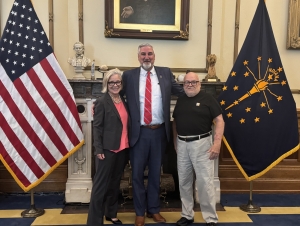
DPC Board Member Arthur Hill (right) and DPC Eastern Region Advocacy Director Elizabeth Lively with Indiana Governor Eric Holcomb at the 2024 bill signing for SB 215 that opened access to affordable Medigap coverage for under-age 65 dialysis patients.
Medigap is Medicare Supplement Insurance sold by private insurance companies that helps cover the “gap” costs that Original Medicare (Parts A and B) does not. Because Medicare only covers 80% of costs with no annual cap, Medigap provides vital secondary coverage to help cover hospitalizations (Part A) and outpatient care (Part B). When Medigap plans were first introduced, Congress only guaranteed issue of these plans to traditional Medicare beneficiaries (those age 65 and older who are enrolled in Medicare Parts A and B) with consumer protections and did not extend this protection to disability and ESRD patients who obtain Medicare coverage prior to age 65. Without a federal mandate to extend coverage to all Medicare-eligible beneficiaries regardless of age, states are left to determine their own Medigap policy for ESRD patients under age 65.
Over the last four years, five states (Virginia, Kentucky, Indiana, Nevada, Texas) have passed Medigap premium protected legislation for End Stage Renal Disease (ESRD) patients under the age of 65, with one state (Rhode Island) passing a partial victory that may result in future positive amendments. Legislation is still active in three states (Ohio, Massachusetts, Michigan) with plans to continue our work next year in California, Arizona, Georgia. Nebraska, and Utah. This is what success looks like: actual wins combined with actively adjusting strategy in states that have positive momentum towards a future victory.
Of the five states that passed legislation, only Virginia passed legislation in the first year. Success in the other four states was cumulative – two and three years working the issue, building legislator support, collaborating with partner organizations, and engaging patient ambassadors to tell their stories directly to lawmakers. Our patient ambassador stories are a critical part of achieving success. Staying optimistic — amid legislative sessions that are often short (30-45 days in many states) and filled with other issues competing with Medigap — is so important.
DPC launched its Medigap campaign investing in development of a DPC Medigap Report Card housed on the DPC website, supported by state specific reports of CMS Medicare Claims data analyzed by Health Management Associates and the Berkeley Research Group. DPC used this data to push back on claims by the health plans that covering under-age 65 ESRD patients would make coverage unaffordable for seniors already enrolled in Medigap and that insurers would stop writing Medigap plans.
Trusted data from independent and respected sources is critically important. Without accurate data, our campaign would be futile. Legislators want to know the cost impact for their constituents. That is often their first question. The actuarial studies from Health Management Associates and the Berkeley Research Group presented premium impact data critically important to dispel the false claims from the health plans. The reports also provided DPC with estimated budgetary savings to state Medicaid programs to share with lawmakers. DPCs investment in these actuarial studies have resulted in the opportunity for thousands of under-age 65 ESRD patients to enroll in affordable Medigap coverage, keeping them off Medicaid and opening access to kidney transplantation. Having trusted data to share is the foundation of our Medigap campaign.
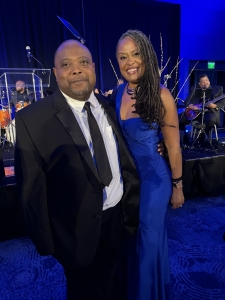
Georgia State Senator Nikki Merritt, Chair of the Georgia Legislative Black Caucus, and DPC Board Member Christopher Richards at the Annual Heritage Gala.
However, data is only one element of a successful legislative advocacy strategy. Personal stories from patients bring actuarial data and the DPC Medigap Report Card to life. Advocacy work is about much more than just numbers. It’s sharing how kidney failure impacts lives and how legislators can help patients. Telling patient stories is the “secret sauce” that adds momentum to any advocacy campaign. In each of the five states where DPC achieved legislative success, telling patient stories was the tactic that provided positive momentum. For example, in Virginia, the House bill sponsor had visited a dialysis center in his district, meeting patients and hearing their stories. This bill sponsor mentioned that experience every time he spoke about the importance of getting his bill passed. The result was unanimous votes in the Virginia House and Senate. An engaged bill sponsor motivated by patient stories is the “secret sauce” to our advocacy efforts.
DPC’s patient ambassadors from states where legislation is active have multiple strategic ways to share their stories to help push our advocacy efforts forward, including letters to the editor, responding to action alerts, sharing their stories in person at committee hearings or submitting written testimony, attending meetings with legislators and DPC staff, or helping to facilitate a legislator visit to your dialysis center.
If you aren’t already a DPC patient ambassador, click here or visit the DPC website at dialysispatients.org and click “Get Involved” to apply.