

Dr. Velma Scantlebury, MD, FACS, GCM, DPC Education Center Health Care Consultant
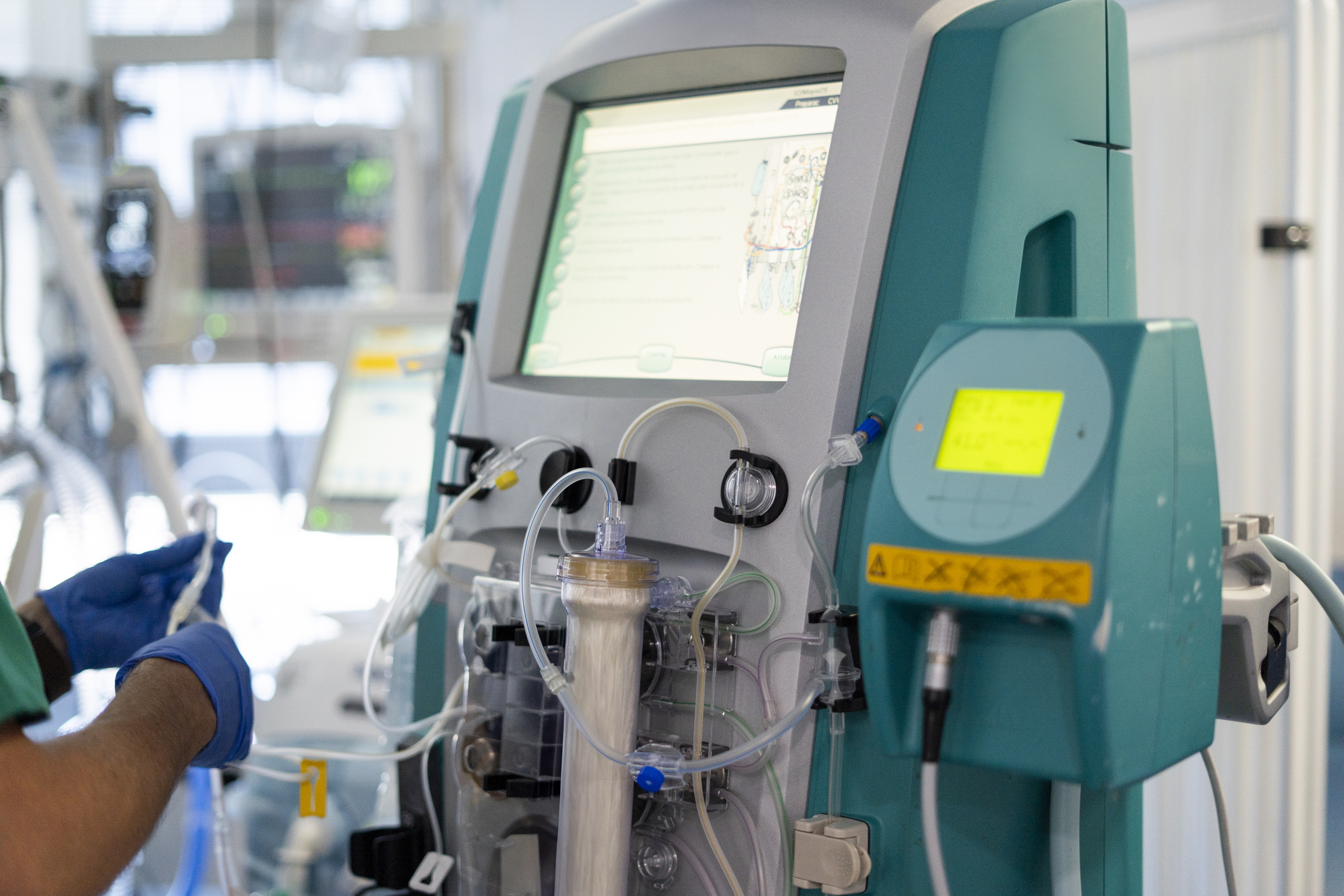
Over 90,000 patients sit on dialysis awaiting kidney transplantation, and thousands more are on some form of dialysis modality, with the hope of maintaining life without a kidney transplant. From chronic kidney disease (CKD) to end stage kidney disease (ESKD) there are significant challenges for both patients and healthcare providers, including delays in the onset of dialysis, complications associated with dialysis, limited access to donor organs and the need for lifelong immunosuppression following transplantation. Additionally, socioeconomic disparities and geographic barriers often impact the quality and availability of care.
A. Innovations in CKD
1. GLP-1 Receptor Agonists: Improving Kidney and Cardiovascular Health
Diabetes remains the most common cause of ESRD and is a major contributor to cardiovascular and metabolic disorders. There is growing evidence of the use of glucagon-like peptide (GLP-1) receptor agonists can improve overall kidney function by improving glucose control as well as cardiovascular risk reduction (1). It is important that GLP-1 receptor agonists be recommended and closely monitored by healthcare professionals, taking into account each patient’s individual risk factors and other health conditions. Proper medical supervision ensures optimal outcomes and minimizes potential side effects or complications associated with these therapies.
2. SGLT2 Inhibitors: Kidney and Heart Protection
Another group of drugs, referred to as sodium-glucose co-transporter 2 (SGLT2) inhibitors can be used to treat patients with CKD. These SGLT2 inhibitors were originally developed for the treatment of type 2 diabetes (T2D). Over time, additional research demonstrated that these medications not only help manage blood sugar levels, but also provide substantial benefits for kidney and heart health. Patients who are not diabetic have experienced improvements in overall kidney function when using SGLT2 inhibitors.
B. Managing Complications of CKD
For many patients with CKD as well as ESRD not yet on dialysis, there are many abnormalities that arise that cannot be easily treated by medication that require good kidney function to be metabolized. Currently there is hope for some of these conditions:
- Metabolic acidosis – a condition where the body accumulates too much acid. A new drug is being studied in adults with CKD that will eliminate excess acid in the body and increase bicarbonate levels. This is in Phase 3 clinical trial currently.
- Anemia – correcting anemia of kidney disease can be challenging. A recent study has shown that vadadustat(Vafseo), an oral medication taken once daily, is just as effective as current injectable medications for managing anemia in dialysis patients.
- High phosphorus levels – this is a significant issue for many dialysis patients. While the standard medications are phosphorus binders, the FDA approved Xphozah (tenopanor) in 2023. Oxylanthanum Carbonate (OLC) is a current medication under review by the FDA. It uses nanoparticle technology to improve phosphorus binding potency and decrease the number of pills needed.
C. Development in Innovative Kidney Preservation
Advances in organ preservation techniques, the development of artificial kidneys, and improvements in immunosuppressive therapies offer hope for better outcomes and increased organ availability. With the limiting factor being the availability of organs, there are many innovations aimed at not only improving the viability of available organs, but alternative options for human donor organ replacement:
1. Machine Perfusion
- The Room Temperature Machine Perfusion (RTMP) device could make more kidneys available for transplant. Many donated kidneys are not used today because they can be damaged during cold storage. This RTMP device keeps kidneys healthy longer by perfusing the organs at room temperature, allowing doctors to test how well they work before kidney implantation. The FDA recently gave the device breakthrough status, which speeds up review of technologies that could improve patient care.
- New technologies like the Kidney Pod and NoMo™ Kidney Pump keep donor kidneys at body temperature with oxygen and nutrients during transport. This can “resuscitate” kidneys that were previously considered too poor in quality, significantly reducing the number of discarded organs.
2. Artificial kidneys
Research into the implantable/wearable “bioartificial” kidney device has been in development for over 12 years. Engineered like a small dialysis/tubule system, it held the promise of providing patients with kidney failure another option other than machine dialysis and/or waiting for a kidney transplant. These Artificial kidneys, when utilizing a patient’s own cells, are designed to work like real kidneys without the risk of rejection.
Artificial kidneys are being developed in two main ways. First are wearable or implantable bioartificial kidney devices, which are engineered much like a miniaturized dialysis system: blood flows across a biocompatible membrane with carefully sized pores that allow water and small waste molecules to pass while keeping blood cells and proteins in the bloodstream. Some designs add a second “tubule” component by utilizing human kidney cells that are programmed to replicate on a scaffold so they can help regulate electrolytes and fluid balance, making the device behave more like a real kidney.
The second approach is tissue engineering (regenerative medicine), in which scientists attempt to grow kidney tissue using stem cells or a donor-organ scaffold that has had its cells removed and then is “re-seeded” with new cells. A key challenge for lab-grown kidneys is building enough tiny blood vessels (vascularization) and achieving full, durable kidney function at human scale.
Wearable versions require a power source such as a pump/battery. Implantable versions are powered by the patient’s blood pressure to move blood flow through the system. Researchers are optimistic that such devices may be approved by 2030.
3. 3D kidneys
Mayo Clinic researchers use 3D bioprinters to create living models of skin, cartilage, and organ tissue using medical imaging and patient-specific cells. These tissue models help scientists study disease, test treatments, and develop future transplant solutions. While still in development, this technology offers hope for patients facing organ failure or donor shortages.
D. Expanding the Organ Supply
Innovative approaches such as xenotransplantation, regenerative medicine, and precision medicine are being explored to address the shortage of donor organs and improve transplantation success rates. Collaborative efforts between researchers, clinicians, and policymakers are crucial to drive progress in this field, ensuring that patients with ESKD receive optimal care and support.
- Xenotransplantation: This is the process of implanting cells or organs from a non-human source into humans. 2025 marked a massive leap with the first clinical trials transplanting modified pig kidneys into living human patients. This is made possible by genetically modifying the donating animal by removing certain genes that are responsible for the genetic incompatibility. This reduces the rejection rate, but does not eliminate it. This technology aims to eliminate the transplant waiting list entirely by providing a sustainable source of organs. While there are potential benefits, the process of xenotransplantation exposes the recipient to infections from cross-species organisms that may become a concern.
- Enzyme Technology for Universal Organs: Since blood type “O” is the only blood type that has no “A” or “B” antibodies, a new technology has allowed for the removal of surface molecules from the red blood cells, thus converting A or B blood types into O blood type. In 2025, researchers have successfully used these specific enzymes to “convert” a donor kidney’s blood type from A to O, allowing for implantation into a brain-dead recipient (with family consent). By removing the potential for antibody development by incompatible kidneys, this opens the pathway for providing more universal donor organs and reducing matching barriers that currently disqualify many pairs of donor-recipient combinations,
Conclusion
End stage kidney disease remains a high-burden condition driven by progressive CKD, limited organ availability, and the long-term challenges of dialysis and transplantation. However, the landscape is rapidly changing: therapies such as GLP-1 receptor agonists and SGLT2 inhibitors are improving cardio-renal outcomes, newer options for complications like acidosis, anemia, and hyperphosphatemia are emerging, and transplant success may improve through better organ preservation technologies such as machine perfusion. At the same time, bioartificial kidneys, 3D tissue engineering, xenotransplantation, and enzyme-based “universal organ” strategies offer potential paths to expand the donor pool and reduce time on the waitlist. Advancing these innovations will require continued research, careful monitoring for safety and durability, and equitable access so that these advances benefit all patients with CKD and ESKD.